Loading...
Serving Menifee, CA and surrounding areas. (909) 344-3067
MFY Menifee Masonry is a licensed masonry contractor serving Moreno Valley, CA with foundation repair, concrete block walls, retaining wall construction, and driveway pavers - and we understand the clay soil movement that cracks slabs and shifts foundations across this city.
We respond to every new inquiry within 1 business day and give you honest written estimates with no pressure tactics.
Moreno Valley sits on expansive clay soils that swell with winter rain and contract through the summer, and that seasonal cycle is the most common cause of foundation cracking and settling across the city. Our foundation repair process starts with an honest assessment of the soil and drainage conditions around your home - not just the visible cracks - because fixing the underlying drainage problem is what keeps the foundation stable after the repair is complete.
Many Moreno Valley homes from the 1980s and 1990s have original concrete block perimeter and garden walls that are now showing mortar joint cracking and cap damage from years of clay soil movement and thermal cycling. Repairing block walls on clay soil requires attention to the footing condition and drainage, not just the visible surface damage.
Properties in the hillside areas of east Moreno Valley often have sloped lots that concentrate runoff toward retaining walls after the winter rain events that hit the Inland Empire hard in El Nino years. A retaining wall built with proper gravel drainage behind it stays straight through those wet winters; one without drainage begins to bow outward within a few years on these clay-heavy soils.
Moreno Valley concrete driveways from the 1980s and 1990s are now 25 to 40 years old and commonly show wide cracks, edge crumbling, and surface scaling from the clay soil movement beneath them combined with 100-degree summer heat above. Paver replacements allow individual sections to be lifted and releveled when settling occurs, avoiding a full-slab tearout every time the ground shifts.
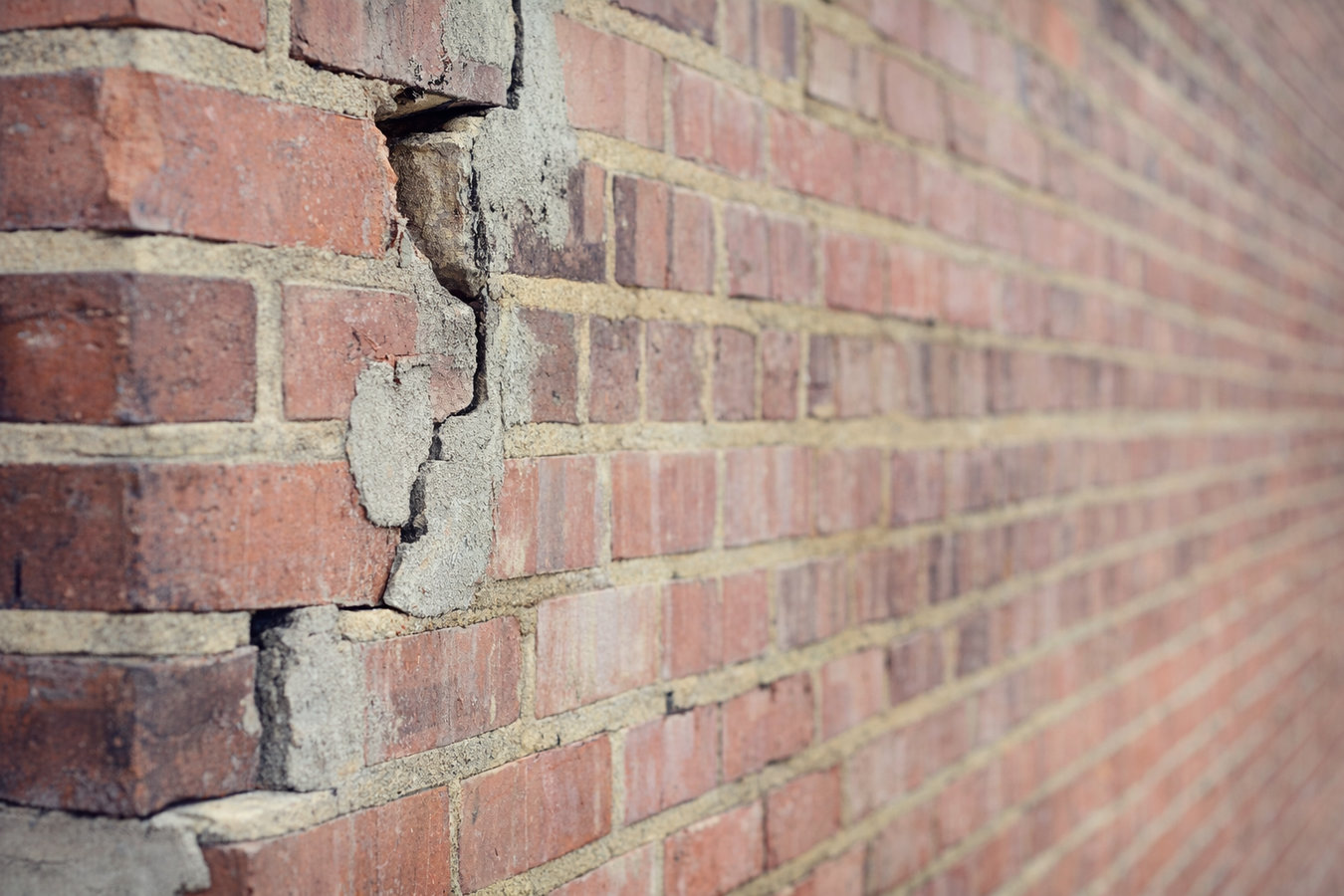
Moreno Valley homes with brick garden walls, mailbox posts, or decorative column accents often show mortar joint cracking from the combination of intense UV exposure and the thermal expansion the inland heat produces in masonry. Tuckpointing those joints before water gets in and freeze-thaw cycles widen the gaps is significantly cheaper than replacing sections of brick after water damage has set in.
Older Moreno Valley neighborhoods often have original concrete walkways from the 1980s and 1990s that have heaved and cracked from clay soil expansion beneath them. A properly installed replacement walkway with adequate base preparation and control joints is designed to move with the soil rather than crack in random directions when the ground shifts seasonally.
Moreno Valley grew faster than almost any other Inland Empire city during the 1980s and 1990s, and much of that growth happened quickly on land that had not been extensively developed before. The clay-heavy soils that cover large portions of the Inland Empire are well documented by the California Geological Survey as expansive soils that create specific challenges for masonry and foundation work. When soil expands during a wet winter and contracts during a dry summer, anything sitting on top of it - driveways, walkways, block walls, and foundations - gets pushed and pulled through the same cycle. Homes built on fill soil that was not given adequate time to compact before construction are the most affected, and those homes are well-represented in Moreno Valley's housing stock.
The summer heat adds a second stress layer. Moreno Valley regularly sees temperatures above 100 degrees Fahrenheit, and that heat causes masonry materials to expand during the day and cool at night. Over many years, that thermal cycling cracks mortar joints, separates flashing, and contributes to the surface scaling visible on older concrete across the city. A masonry contractor working in Moreno Valley regularly accounts for both the soil movement and the thermal environment - not just the visible damage - when designing repairs and new installations.
Structural masonry and foundation work in Moreno Valley requires permits from the City of Moreno Valley Building and Safety Division, and we handle permit applications on behalf of our customers as part of every permitted project. We are familiar with the permit process and typical review timelines in this city, and we account for that timeline when scheduling jobs so customers are not waiting on approvals after work was supposed to start.
Moreno Valley is a large city, and the housing conditions vary by area. The older western neighborhoods near March Air Reserve Base have different soil and age characteristics than the newer Rancho Belago developments on the east side. We have worked on properties across both - from homes in the Sunnymead corridor that are showing their 30-plus years to newer two-story houses on the east side with larger concrete flatwork and more recently installed block walls. The city sits along the 60 freeway corridor, and we serve customers from the western end of Moreno Valley through to the eastern edge.
We also serve neighboring Perris to the south, where the clay soil conditions are similarly challenging. If you have neighbors who have used us in Perris, the work quality and process are the same in Moreno Valley.
Call us or send a message with a description of what you are seeing - sticking doors, cracked concrete, a leaning wall, or a planned new installation. We respond to all Moreno Valley inquiries within 1 business day and will schedule a time to come look at the site in person.
We visit your property, assess the soil and drainage conditions as well as the visible damage, and give you a written estimate that breaks down materials and labor. For foundation and structural work, we do not quote from photos - a site visit is the only way to give you an accurate number on Moreno Valley clay soil conditions.
We handle permit applications for structural work and keep you informed of the review timeline. Most Moreno Valley permits for residential masonry take two to three weeks to process. We schedule your job start date around permit approval so there are no delays once the crew is ready.
Our crew completes the work on the agreed schedule and cleans the site each day. We walk you through the completed work at the end of the project and explain what to watch for in the first wet season after a foundation or retaining wall repair.
We serve Moreno Valley homeowners with foundation repair, retaining walls, block walls, and concrete work designed for the clay soil conditions and summer heat that define this part of the Inland Empire.
(909) 344-3067Moreno Valley is one of the largest cities in Riverside County with a population of around 210,000, sitting at approximately 1,600 feet elevation in a valley surrounded by the San Bernardino Mountains to the north. The city grew rapidly during the 1980s and 1990s as affordable housing drew families from Los Angeles and Orange County, and the bulk of its housing stock was built during that period. Single-family tract homes with stucco exteriors and concrete tile roofs are the dominant housing type across most of the city, with modest lot sizes in older western neighborhoods and larger parcels in the newer eastern communities like Rancho Belago. March Air Reserve Base on the western edge of the city has been a major employer and community anchor since World War II. You can learn more about the city at the Moreno Valley, California Wikipedia article.
The city is divided into distinct residential areas with different property profiles. The Sunnymead corridor along Alessandro Boulevard has older commercial and residential development. The eastern neighborhoods around Rancho Belago are newer planned communities with larger homes and more recent construction. Lake Perris State Recreation Area sits just south of the city and is one of the most-used outdoor recreation spots in the region. We serve homeowners across all of Moreno Valley, from neighborhoods near the base to streets in the newest east-side developments. We also serve neighboring Riverside to the west, where similar Inland Empire clay soil and housing stock conditions apply.
Diagnose and repair foundation cracks, settling, and structural issues to protect your property.
Learn moreRestore chimney integrity with expert tuckpointing, cap replacement, and structural repairs.
Learn moreRemove deteriorated mortar and repoint joints to extend the life of brick and block structures.
Learn moreReplace spalled, cracked, or missing bricks to restore appearance and structural soundness.
Learn moreInstall durable, attractive paver driveways built for Southern California heat and traffic.
Learn moreDesign and build retaining walls that control erosion and create usable outdoor space.
Learn moreClean, repair, and restore aging masonry to its original strength and appearance.
Learn moreConstruct custom masonry fireplaces and fire pits for indoor and outdoor living spaces.
Learn moreApply natural or manufactured stone veneer to exterior walls, columns, and accent features.
Learn moreBuild solid CMU block walls for privacy, property division, and structural support.
Learn moreInstall reinforced block wall foundations engineered for lasting stability.
Learn moreCreate outdoor kitchen counters, BBQ surrounds, and entertainment areas in durable masonry.
Learn moreLay flagstone, brick, or paver walkways that enhance curb appeal and foot traffic flow.
Learn moreBuild new brick walls for fences, garden borders, and structural enclosures.
Learn moreCraft natural stone walls, steps, and features using traditional masonry techniques.
Learn moreRefresh mortar joints on brick surfaces to prevent water infiltration and structural damage.
Learn moreCall us or fill out the form today - we respond to Moreno Valley inquiries within 1 business day and give you a written estimate with no surprise charges.